
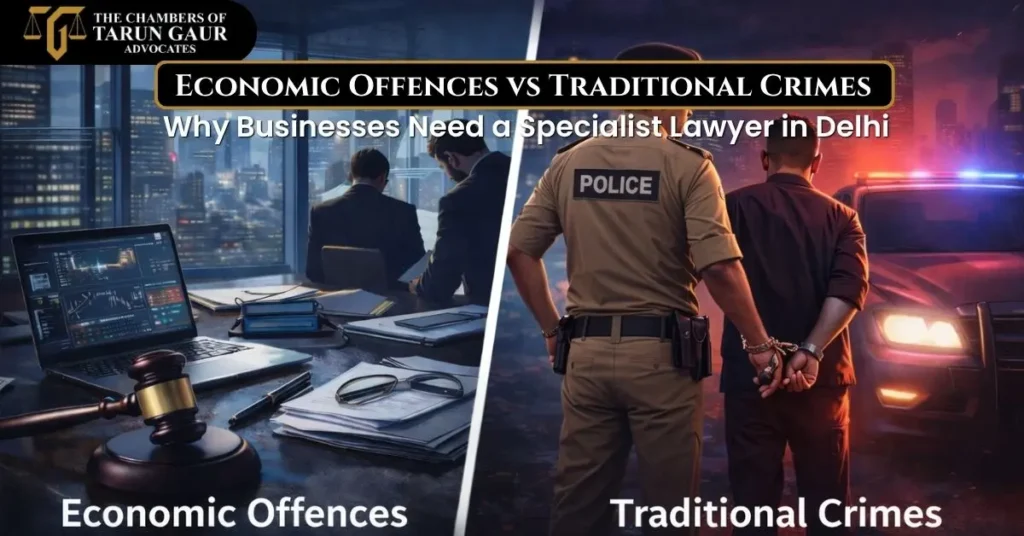
Economic offences now form over 5% of all reported crimes in India and are growing rapidly. Unlike traditional crimes, they are invisible, multi-jurisdictional, and often involve parallel proceedings under several statutes.
Key Differences
Traditional crimes involve immediate victims and visible acts; economic offences harm diffuse victims (banks, shareholders, government) and trigger simultaneous regulatory, civil, and criminal actions.
Delhi-NCR Vulnerability
Corporate headquarters, banks, and fintech hubs make the region a focal point for ED, SFIO, and CBI probes.
Recent Illustration
The ongoing RCOM money-laundering investigation (2025–26) shows how one bank-fraud allegation can lead to ED raids, property attachments, and personal liability for directors — consequences rarely seen in traditional crime cases.
When Specialist Advice Becomes Essential
Receipt of ED summons, GST fake-invoice notice, or director disqualification proceedings requires nuanced strategy that general criminal lawyers may not provide.
It is advisable for businesses or individuals under scrutiny for economic offences to consult an experienced lawyer specializing in white-collar crimes and economic offences.